How Clinomia works
How cases, sessions and progress come together in one workspace, and what that changes for the clinical team.
One workspace for the clinical work
Clinomia is where a practice plans and follows its clinical work: the cases, the sessions that deliver them, and the progress steps in between.
Each person works from their own role. Dentists start the day on the session in front of them, assistants and front office work from the board and the calendar, and managers review how the work ran.
It is not about directing clinical behavior. It makes the state of every case visible, so decisions are better timed and less has to be held in memory.
What Clinomia keeps track of
Clinomia is organized around the way dental treatment actually unfolds:
Sessions
Each visit with its dentist, assistant, chair and time, linked to its case and checked against working hours, leave and conflicts
Cases
Each treatment from planning to completion, with its type, teeth, progress steps, notes and cognitive load
Treatment plans
A consult and the cases planned under it, so the patient's whole plan is visible from any of its visits
Time and outcomes
How each visit ran against plan, how cases progress, and which are aging or due soon
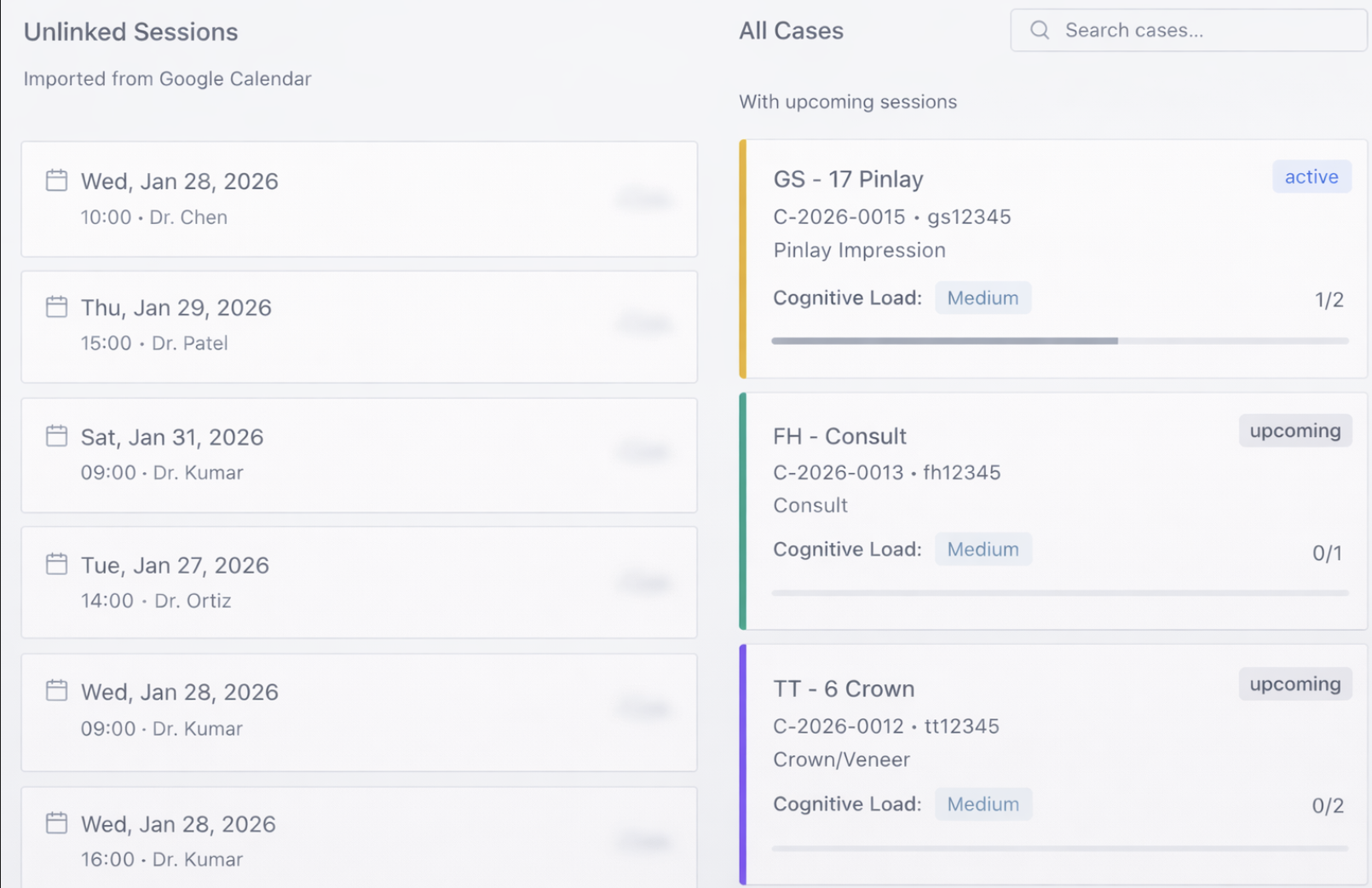
Existing appointments can be imported from Google Calendar and linked to their cases, so the schedule starts complete.
From activity to insight
Most practice software reports what happened after the fact. Clinomia shows what is happening now and what will need attention soon.
Because sessions, cases and plans are connected, the context arrives when it matters — before a decision is made, not after.
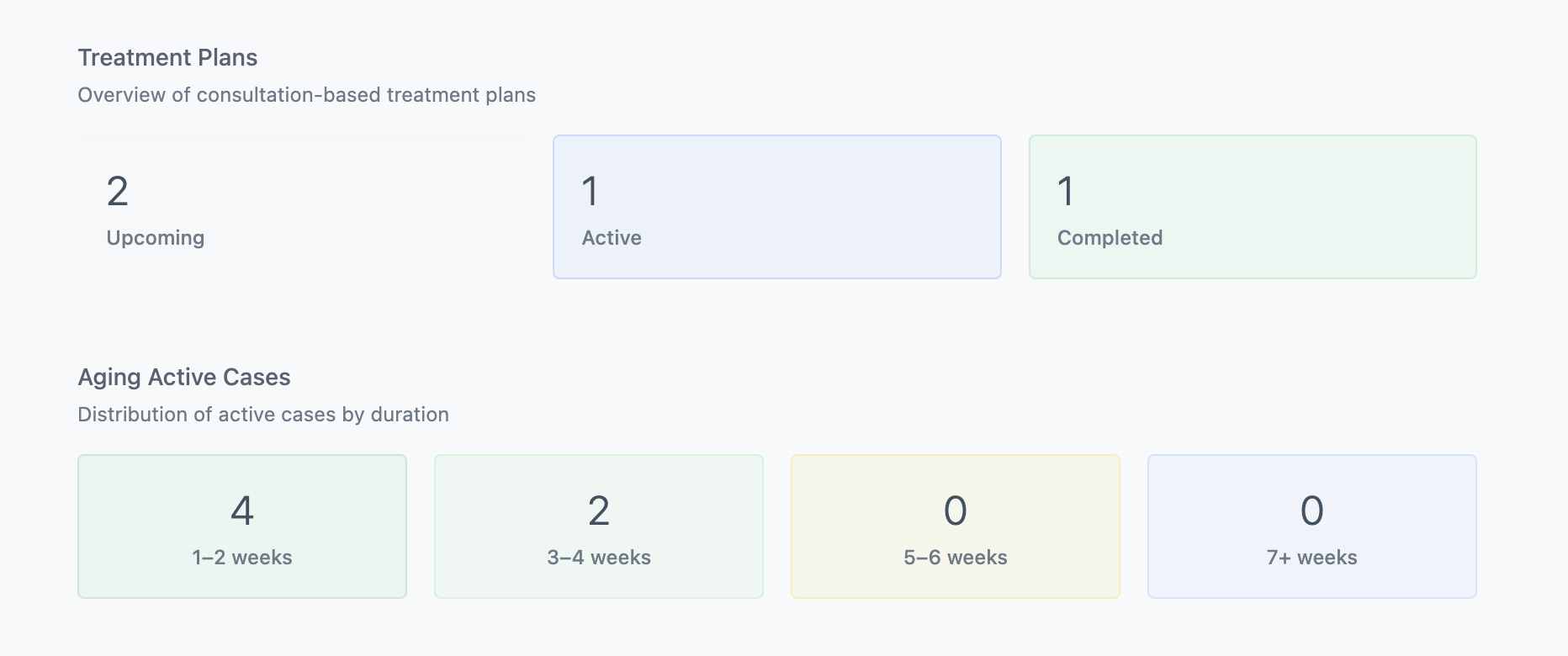
Early visibility into case progression
See which cases are on track, which have stalled and which are nearing their due date, before they become hard to recover
Continuity at every visit
A dentist's day opens on where the case left off, the notes from the last visit, the step this visit is for and whether the next visit is booked
Workload in proportion
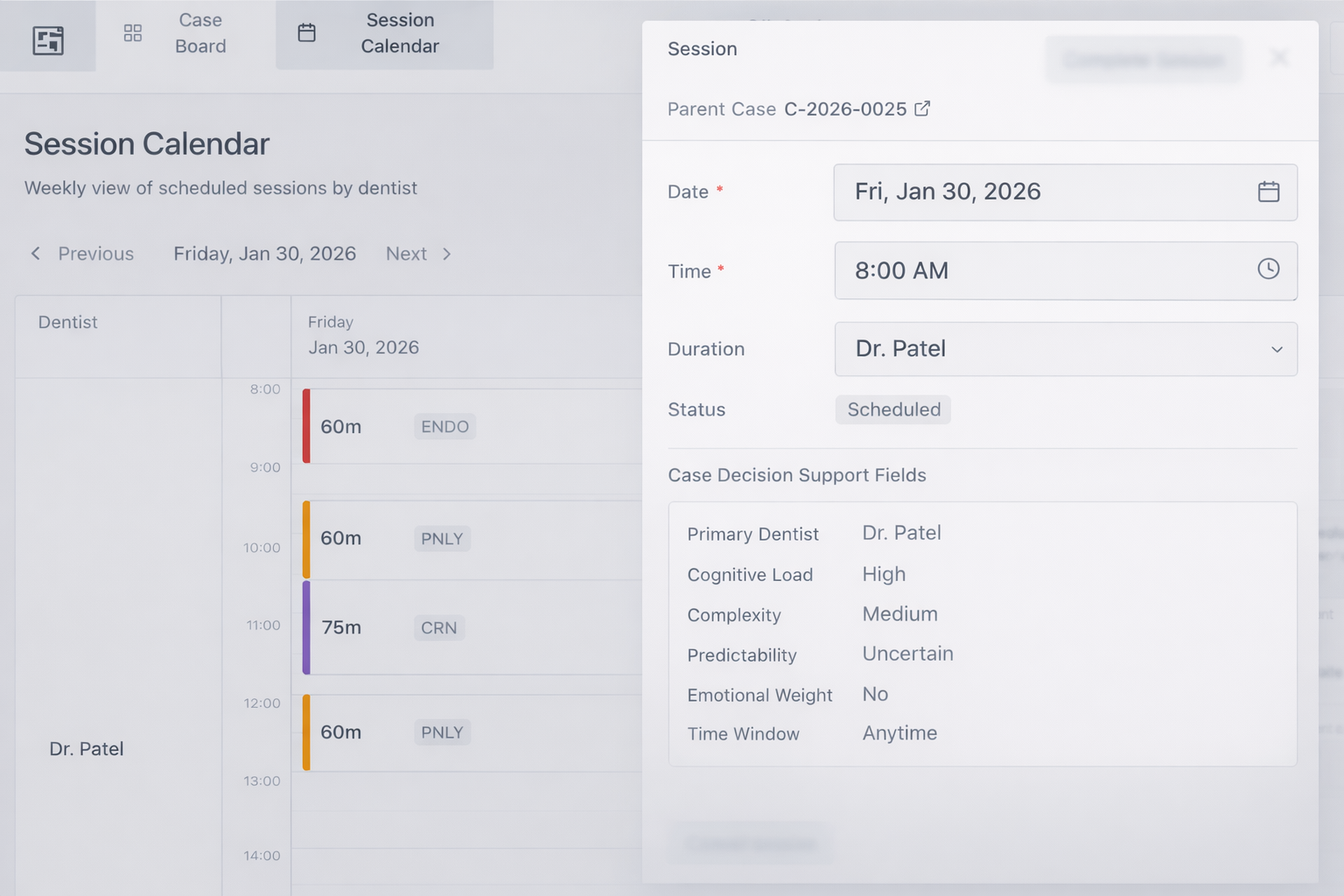
Cases carry a cognitive-load band, and each dentist's high-load days and caseload are shown against limits they set themselves
What clinicians gain
The value is not measured in dashboards. It shows up in how the working day feels.
Clearer days
Less time reconstructing case history or searching for context. Each visit starts with what you need to know.
Fewer surprises
Stalled cases, plans running past their dates and overloaded days show up early, not at the end of the month.
Better-timed decisions
The state of each case is visible when it is useful, so the team can adjust course before problems compound.
Reduced cognitive load
Less to hold in memory: next steps, linked cases and patient context are written down where the whole team can see them.
Designed around clinical autonomy
Clinomia supports professional judgment; it does not replace it. It does not prescribe treatment, and its workload guidance warns without ever blocking a decision.
Workload stays personal: a dentist's own trend over recent weeks is visible only to them, and Clinomia never turns it into a score or a rating.
Clinical responsibility remains where it belongs: with the clinician.
From understanding to conversation
If this sounds like the way your practice works, see Clinomia on realistic cases in a short, guided walkthrough.